Views: 1,055


You can practice doing this exercise in various ways; here are a couple of suggestions.
¿Sabes quién es responsable de la seguridad de tu auto cuando lo estacionas en la calle, en un hotel, en un supermercado o en un centro comercial? ¡Tú, por supuesto! Esa no es la verdad legal, sino el motivo de este artículo. Al mudarse a Costa Rica, hay buenas razones para aprender más sobre la cultura y las costumbres locales.
¿Y al estacionarlo en un estacionamiento de pago? Bueno…
La semana pasada, mis clientes se hospedaron en el Hotel Best Western Irazú y, mientras los esperaba, estacioné mi auto en el estacionamiento del hotel.
Me llamó la atención un letrero en la cerca que decía, en español e inglés, “el usuario asume todo el riesgo”. El letrero era tan pequeño que ni siquiera era legible a distancia. Es costumbre que la mayoría de los supermercados, centros comerciales, hoteles y muchos otros lugares públicos que ofrecen estacionamiento a sus clientes coloquen letreros como este. No solo conducir en Costa Rica es diferente (hablaremos más sobre esto la próxima vez), sino también estacionar.
¿Quién es responsable de su auto al estacionarse en un centro comercial?
¡Advertencia!
Cuando visite Costa Rica como turista o se mude a Costa Rica, no deje su equipaje en el estacionamiento de su auto en hoteles, restaurantes o tiendas. Si su vehículo está estacionado en el estacionamiento de un supermercado, restaurante, banco u hotel mientras le roban el equipaje, generalmente estará solo. ¡Esta es una advertencia: la seguridad de su auto es su responsabilidad!
¿Qué hacer si le roban?
Puede que decida no mudarse aquí después de que le roben el equipaje. Es una lástima que su pasaporte y computadora estén entre las pertenencias robadas. Pero si sucede, ¿qué sigue?
Acuda a la policía (O.I.J.) de la ciudad o pueblo más cercano donde le robaron. Presente una denuncia con todos los detalles para que pueda responsabilizar al hotel o negocio donde ocurrió el robo.
Responsabilidad Civil
El 19 de septiembre de 2007 se dictó una primera sentencia judicial (EXP: 05-000143-0164-CI, RES: 000655-F-2007). El supermercado PriceSmart fue condenado a ¢1.260.000 y asumió la responsabilidad civil por la seguridad de los vehículos de los demandantes en su estacionamiento mientras sus clientes compraban. El vehículo de la parte demandante fue robado del estacionamiento. Esta sentencia judicial determinó que PriceSmart tenía responsabilidad extracontractual objetiva.
Si se estaciona en un restaurante, tienda, oficina, centro comercial, universidad, tienda de conveniencia o supermercado con espacio para clientes, el negocio donde compra es responsable del vehículo. Por pequeño que sea su local, tenga en cuenta que debe responder por cualquier daño o robo causado a los vehículos estacionados allí. Según esta sentencia, el cliente ya no será considerado cliente. Ahora es un consumidor. Esto significa que la sola intención de esa persona de ingresar al estacionamiento le permite reclamar los daños que sufra su vehículo allí mismo. Solo casos excepcionales, como accidentes causados por terremotos o eventos similares, no son su responsabilidad.
Señales de advertencia
Encontrará estas señales de “el usuario asume todo el riesgo” en todas partes, incluso si hay un guardia en el estacionamiento. Esto no significa que tenga que luchar para obtener lo que merece. Sin embargo, el comercio en Costa Rica no siempre es tan responsable ni tan atento con los clientes como en muchos otros países.
¿Quién es responsable de su vehículo al estacionarse en el centro comercial?
Estacionamiento gratuito
Muchos negocios advierten correctamente a sus clientes. Por ejemplo, un letrero que encontré en Terramall en Curridabat dice: “El estacionamiento es gratuito”. Debajo, “No deje objetos de valor en su vehículo; colabore con el personal de seguridad”. Por supuesto, esto no siempre significa que asumirán la responsabilidad.
Hay excepciones. Algunos empresarios comprenden la necesidad de ser responsables del bienestar de sus clientes para que regresen en el futuro.
Estacionamiento de pago
Estacionar su vehículo y pagarlo está protegido por la Ley Reguladora de los Estacionamientos Públicos.
Mi mensaje de hoy es que nunca deje nada de valor en su vehículo para mantener sus pertenencias seguras. No importa dónde estacione su auto o cuán seguro parezca el estacionamiento, ocúpese usted mismo de la seguridad de su vehículo.
Do you know who is responsible for the security of your car when you park it on the street, a hotel, a grocery store, or a mall? Well, you, of course! That’s not the legal truth, but the reason for this article. When moving to Costa Rica, there is a good reason to learn more about the local culture and behavior.
And when parking it in a paid parking lot? Well…
Last week, my clients were staying at the Best Western Irazú Hotel, and while waiting for them, I parked my car in the hotel’s parking lot.
My eye fell on this sign posted on the fence that said, in Spanish and English, “user assumes all risk.” The sign was so small that it wasn’t even very readable at a distance. It is customary for most grocery stores, malls, hotels, and many other public places that offer parking for their clients to post signs like this. Not only is driving in Costa Rica different (more about this next time), but parking is also different.
A Warning!
When you visit Costa Rica as a tourist or move to Costa Rica, don’t leave your luggage in your car at the hotel, restaurant, or store parking lot. If your vehicle is parked in the parking lot of a grocery store, a restaurant, a bank, or a hotel while your luggage gets stolen, you’re usually on your own. This is a warning that the security of your car is your responsibility!
What do you do when robbed
You might decide you are not moving here after your luggage gets stolen. It’s a bummer if your passport and computer are among the stolen property. But if it happens, what’s next?
Go to the police—O.I.J. in the closest, larger city or town where you were robbed. File a complaint with all the details so you can hold the hotel or business where it happened responsible for the theft.
Civil Responsibility
A first Court decision was made on September 19, 2007 (EXP: 05-000143-0164-CI, RES: 000655-F-2007). Membership Supermarket PriceSmart was sentenced to ¢1,260,000 and was civilly responsible for the security of your cars in their parking lot while their clients were shopping. The suing party’s car was stolen from the parking lot. This court decision decided that Pricemart had objective extra-contractual responsibility.
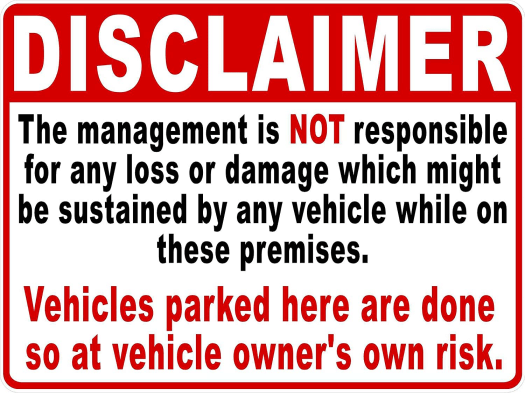
If you park at a restaurant, shop, office, mall, university, convenience store, or grocery store with a parking space for customers, the business where you shop is responsible for the vehicle. However small their local, note that they must answer for all damage or theft caused to vehicles parked there. According to this judgment, the customer will no longer be considered a customer. He/she is now a consumer. That means that the sole intention of that person to enter the parking site makes it possible to claim for the damage that occurs to your car on-site. Only exceptional cases, such as accidents caused by earthquakes or events of that nature, are not their responsibility.
Warning Signs
You will find these signs of “user assumes all risk” everywhere, even if they have a guard in the parking lot. That doesn’t mean you might have to fight to receive what you deserve. However, commerce in Costa Rica is not always as responsible and client-hungry as it is in many other countries worldwide.
Free Parking
Quite a few businesses warn their clients correctly. For example, a sign I found at Terramall in Curridabat states, “Parking is a free service.” Below that, “Don’t leave any valuables in your vehicle; collaborate with the security.” Of course, that doesn’t always mean they will take responsibility.
There are exceptions. Some businesspeople understand the need to be responsible for their clients’ well-being so they may return in the future.
Paid Parking
When parking your vehicle and paying for it, it is protected by the law “Ley Reguladora de los Estacionamientos Públicos.”
My message today is that you should never leave anything of value in your vehicle to keep your belongings safe. No matter where you park your car or how secure the parking seems, take care of the security of your car yourself.


 Practicing: 6 main verbs